

How to Choose the Right Pallet for Your Business
Learn the practical differences between regular, racking and hygiene pallets—and how to select the right option for your load, equipment and storage system.
Plastic pallets are used to store, handle and transport goods in warehouses, factories and distribution centres. Although many plastic pallets look similar, they are not all designed for the same purpose.
Some pallets are made for lighter products and everyday handling. Others contain iron reinforcement rods for heavier loads and warehouse racking. Hygiene pallets have smoother, more enclosed surfaces that make them easier to wash and maintain.
What is a plastic pallet?
A plastic pallet is a flat platform used to support goods during storage and transportation. Products placed on a pallet can be lifted and moved with equipment such as a forklift or pallet truck.
Plastic pallets are used in food and beverage production, pharmaceuticals, manufacturing, agriculture, warehousing, retail distribution and logistics. They are available in different sizes, designs and load capacities, so buyers should not choose a pallet based only on appearance or dimensions.
Three plastic pallet options to consider
There are many pallet designs, but three important options commonly considered by businesses are regular, racking and hygiene plastic pallets.
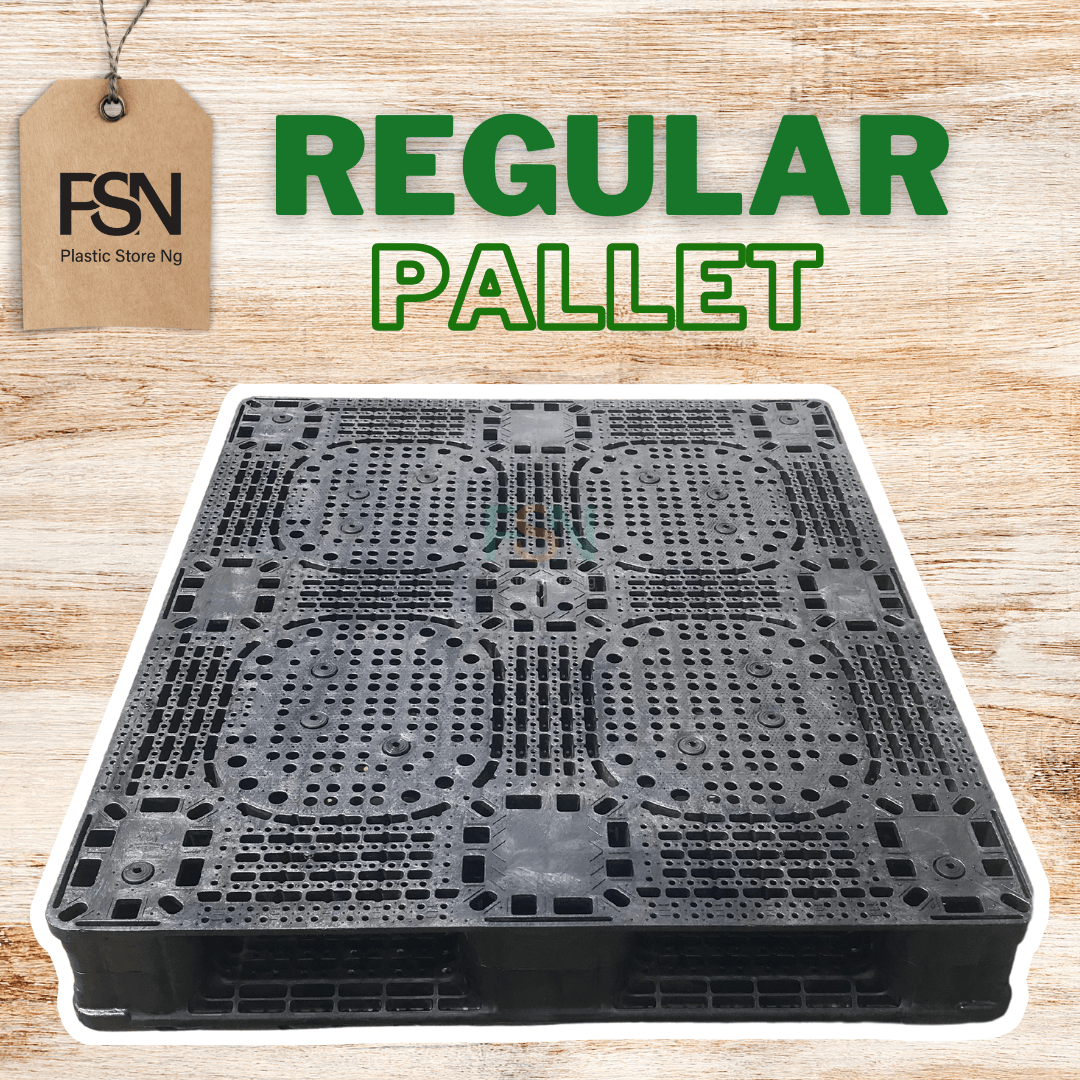
Regular Plastic Pallets
These pallets do not contain iron reinforcement rods. They are best suited to lighter loads, transportation and storage on a flat surface.
- Lighter products
- Floor storage
- General distribution
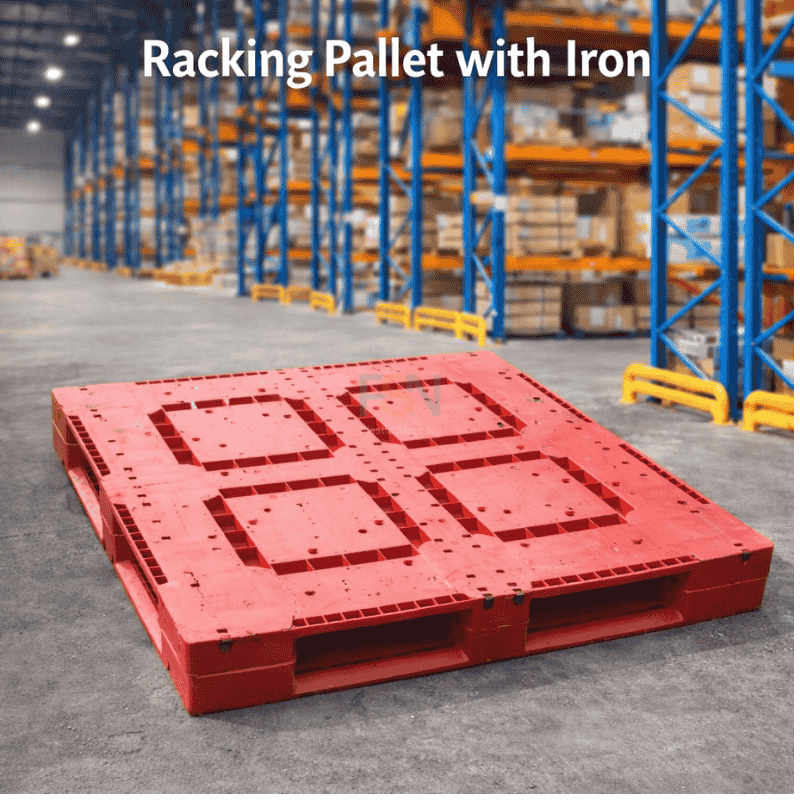
Racking Plastic Pallets
These pallets contain iron rods that provide additional support for heavier goods and use on elevated warehouse racks.
- Heavier products
- Warehouse racking
- Industrial storage
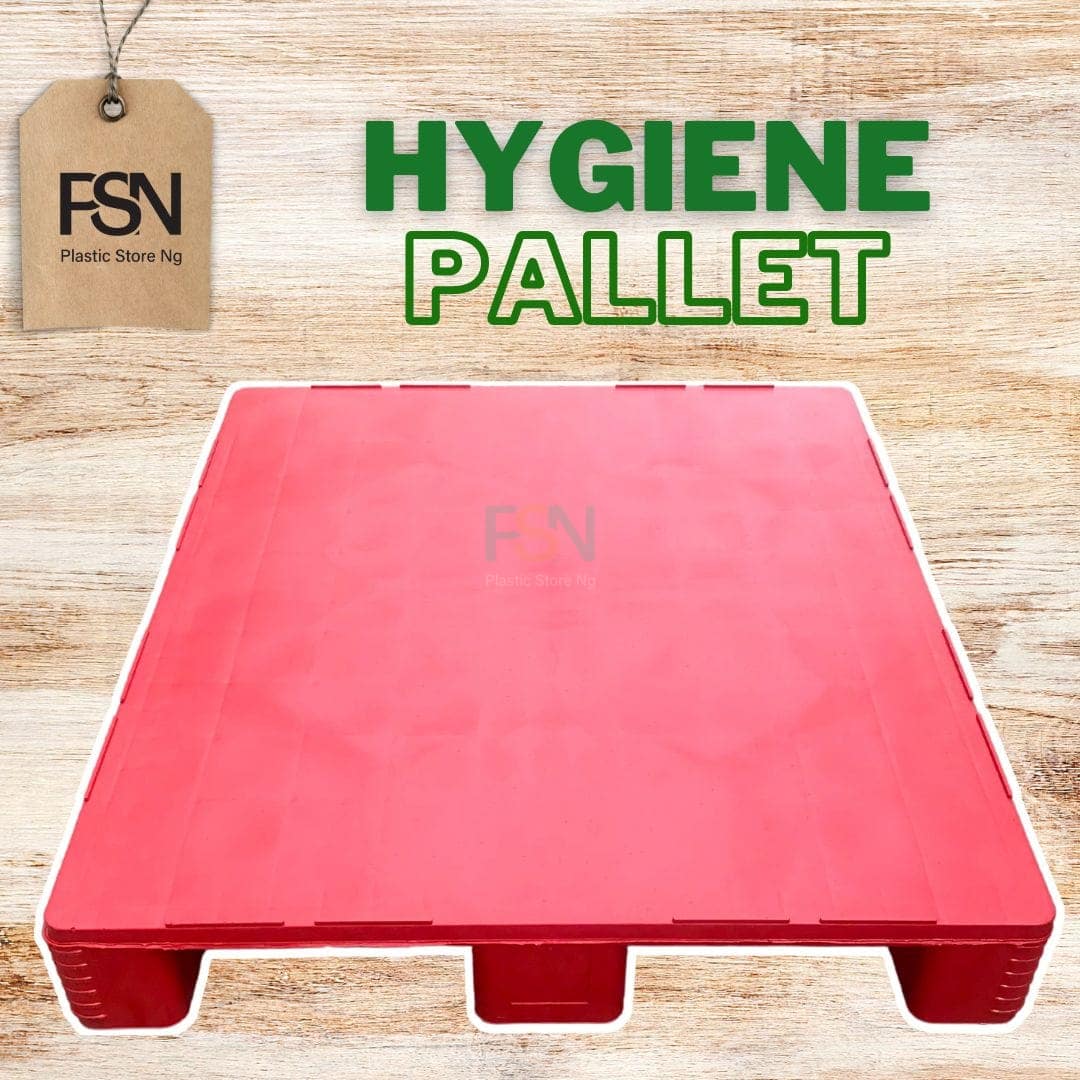
Hygiene Plastic Pallets
These have smoother, more enclosed surfaces that make washing and inspection easier. Some models are also reinforced for racking.
- Food and beverage
- Pharmaceutical operations
- Clean environments
Understanding the differences
| Feature | Regular Pallet | Racking Pallet | Hygiene Pallet |
|---|---|---|---|
| Primary purpose | General handling and storage | Heavier loads and warehouse racking | Operations requiring easier cleaning |
| Iron rods | No | Yes | May contain rods, depending on the model |
| Recommended load | Lighter loads | Heavier loads | Depends on the model and specifications |
| Floor storage | Yes | Yes | Yes |
| Warehouse racking | Not unless specifically rated | Designed for racking within its stated capacity | Only when a racking capacity is confirmed |
| Surface design | May be open or ventilated | Focused on strength and support | Smooth and more enclosed |
| Main consideration | Static and dynamic capacity | Racking capacity and reinforcement | Cleaning requirements and load capacity |
A closer look at each type
Regular plastic pallets
Regular plastic pallets are designed for everyday handling, transportation and floor storage. The regular pallets available from Plastic Store Nigeria do not contain iron reinforcement rods. Because they are not reinforced, they are better suited to lighter loads and applications that do not require heavy goods to be supported on elevated racks.
A regular pallet can still carry goods within its approved capacity. However, a pallet that performs well on a flat floor may be unsuitable for racking because the floor supports its entire base, while a rack provides support at fewer points.
Racking plastic pallets
The racking pallets available from Plastic Store Nigeria contain iron rods. These rods provide additional strength and help reduce bending when a loaded pallet is placed on an elevated warehouse rack.
Racking pallets are more appropriate for heavier goods, industrial storage, distribution centres and repeated warehouse handling. The number of rods and approved capacity can differ between models, so buyers should confirm the specification of the exact pallet they intend to purchase.
Hygiene plastic pallets
Hygiene pallets have smooth, more enclosed surfaces that reduce difficult corners where dirt, liquids or residue can collect. This construction makes them easier to wash, inspect and maintain.
They may be considered for food and beverage production, pharmaceutical operations, cold rooms and other environments where regular cleaning is important. Some hygiene pallets also contain iron rods and carry a confirmed racking capacity.
Featured specification
1200 × 1000 × 150 mm reinforced hygiene pallet supplied by Plastic Store Nigeria.
These figures apply to this specific model and should not be assumed for other sizes or designs.
The documented material composition for this model is 70% virgin material and 30% first-grade material. Its tested unit weighed 27.1 kg.
Understanding pallet load capacity
The weight supported while the pallet rests on a flat and stable surface.
The weight supported while the pallet is lifted or moved by handling equipment.
The weight supported while the pallet sits on a rack with limited support underneath.
A high static capacity does not automatically make a pallet suitable for racking. Always compare the capacity with the way the pallet will actually be used.
Common plastic pallet sizes
Plastic pallets are manufactured in several dimensions. Two sizes available for industrial and warehouse applications include 1200 × 1000 × 150 mm and 1200 × 1200 × 150 mm.
The right size depends on the products, warehouse layout, racks, forklift or pallet-truck compatibility, and truck or container dimensions.
How to choose the right plastic pallet
- Identify the type of product that will be stored.
- Calculate the maximum expected load.
- Confirm whether the pallet will remain on the floor or be placed on racks.
- Check the required pallet dimensions.
- Confirm compatibility with the forklift or pallet truck.
- Decide whether smooth, easy-to-clean construction is required.
- Consider how frequently the pallet will be transported and reused.
Choose a regular pallet for lighter products and general floor storage. Choose a racking pallet for heavier goods or elevated warehouse racks. Choose a hygiene pallet when easier cleaning is important, and confirm its racking capacity if it will also be used on racks.
Frequently asked questions
What is the difference between regular and racking plastic pallets?
Regular pallets do not contain iron reinforcement rods and are better suited to lighter loads and general handling. Racking pallets contain iron rods for additional support and are designed for heavier loads and warehouse racking.
Do regular plastic pallets contain iron rods?
No. The regular pallets available from Plastic Store Nigeria do not contain iron reinforcement rods.
Can regular plastic pallets carry heavy products?
They can carry products within their stated load capacities, but they are better suited to lighter loads because they are not reinforced with iron rods. A reinforced racking pallet should be considered for heavier applications.
Can a regular plastic pallet be placed on a warehouse rack?
Not unless that specific model has a confirmed racking capacity. Static load capacity alone does not mean that a pallet is safe for racking.
Why do racking pallets contain iron rods?
The rods provide additional support and help reduce bending when a loaded pallet is placed on a warehouse rack.
Are hygiene pallets the same as racking pallets?
Not necessarily. Hygiene describes smooth, easy-to-clean construction, while racking describes the ability to support a load on a rack. Some hygiene pallets are also reinforced and rackable.
Which pallet is suitable for food and pharmaceutical operations?
Hygiene pallets may be suitable where easy cleaning and controlled handling are important. Buyers should confirm that the selected model meets the requirements of their facility and application.
What information should I provide when requesting a quotation?
Provide the pallet size, quantity, maximum expected load, intended use, racking requirements, handling equipment and delivery location.
Need help selecting a pallet?
Share your preferred dimensions, expected load, intended application, required quantity and delivery location with Plastic Store Nigeria.
Chat with us on WhatsApp